
Bio-Layer Interferometry (BLI)
Bio-layer interferometry (BLI) is a label-free optical technique that measures biomolecular interactions in real-time. One partner is immobilized onto a biosensor surface while the other binding partner is in solution.
Molecular binding increases biolayer thickness, shifting the reflected white-light interference pattern. This wavelength shift enables real-time measurement of association and dissociation kinetics.
Application: characterization of molecular complexes such as protein-protein, antibody-antigen, protein-nucleic acids, protein-peptides… complexes; determination of affinity and kinetics rate constants (kon, koff).
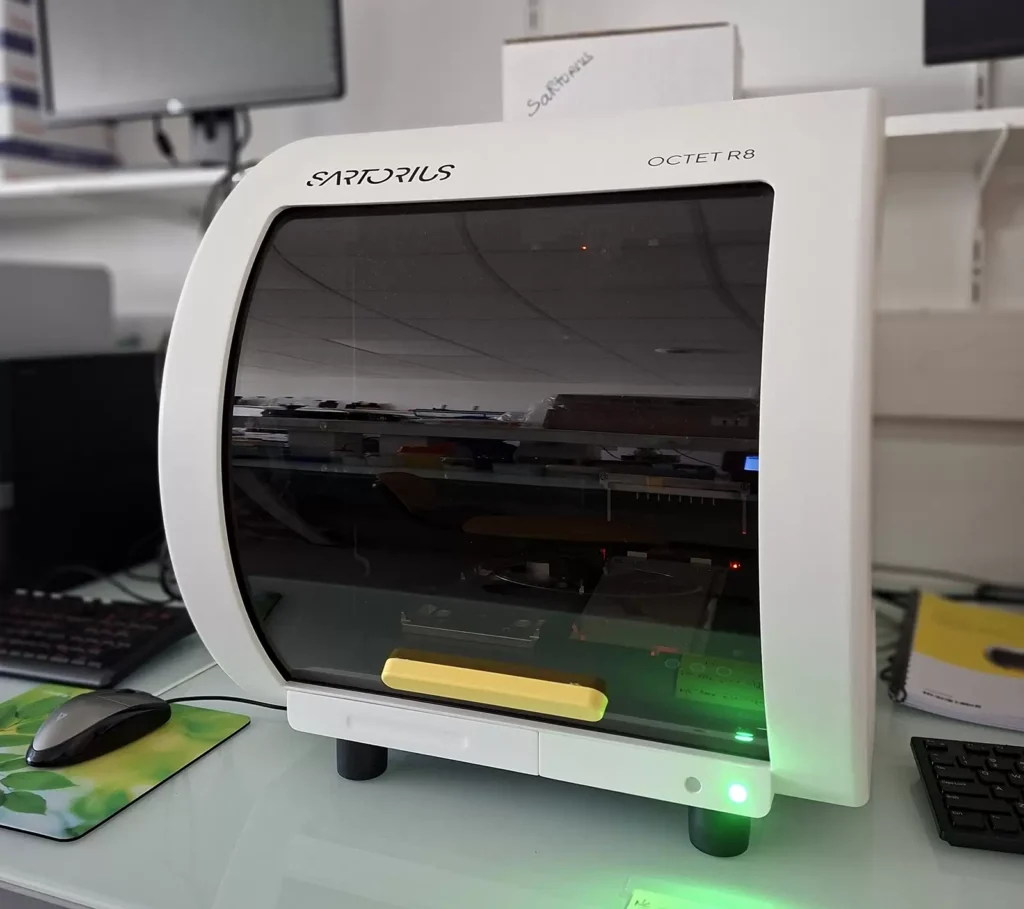
Equipment: Octet® R8 System from Sartorius.
Description: The 8-channel Octet® R8 system performs quantitation and kinetic analysis of up to 96 samples in 30 minutes to 2.5 hours
Circular dichroism (CD)
Circular Dichroism gives an estimation of the different secondary structure elements present in a protein. CD measures the difference in absorption between left- and right-handed circularly polarized light by chiral molecules such as protein.
Applications: CD is used to determine protein secondary structure, to asses 3D structure stability and evaluate conformational changes, folding, upon buffer, pH, … modification.
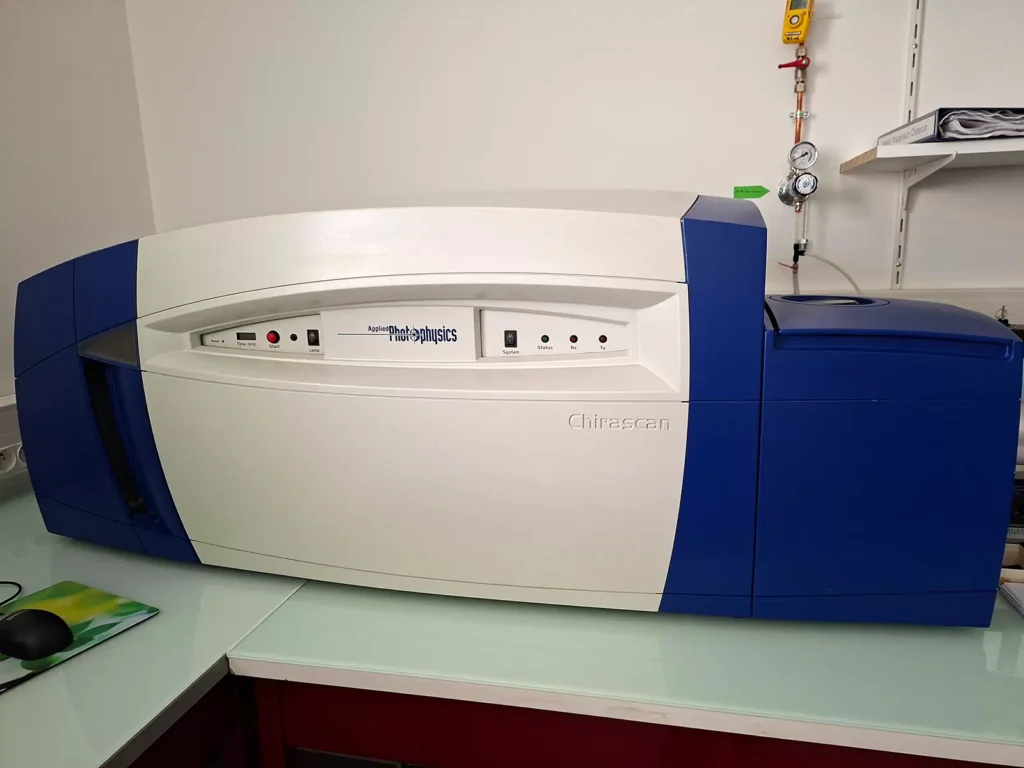
Equipment: CD Chirascan (Applied BiophysicsTM)
NANO DIFFERENTIAL SCANNING FLUORIMETRY (NanoDSF)
NanoDSF measures Thermal melting temperature (Tm) of proteins by measuring fluorescence from tryptophan and tyrosine residues.
Applications: NanoDSF is a technique used to assess protein thermal stability and unfolding by monitoring intrinsic fluorescence from tryptophan and tyrosine residues. It can be used to compare protein stability across different buffer conditions, to assess the effects of ligands and binding partners on the melting temperature, and to screen small-molecules or fragment libraries.
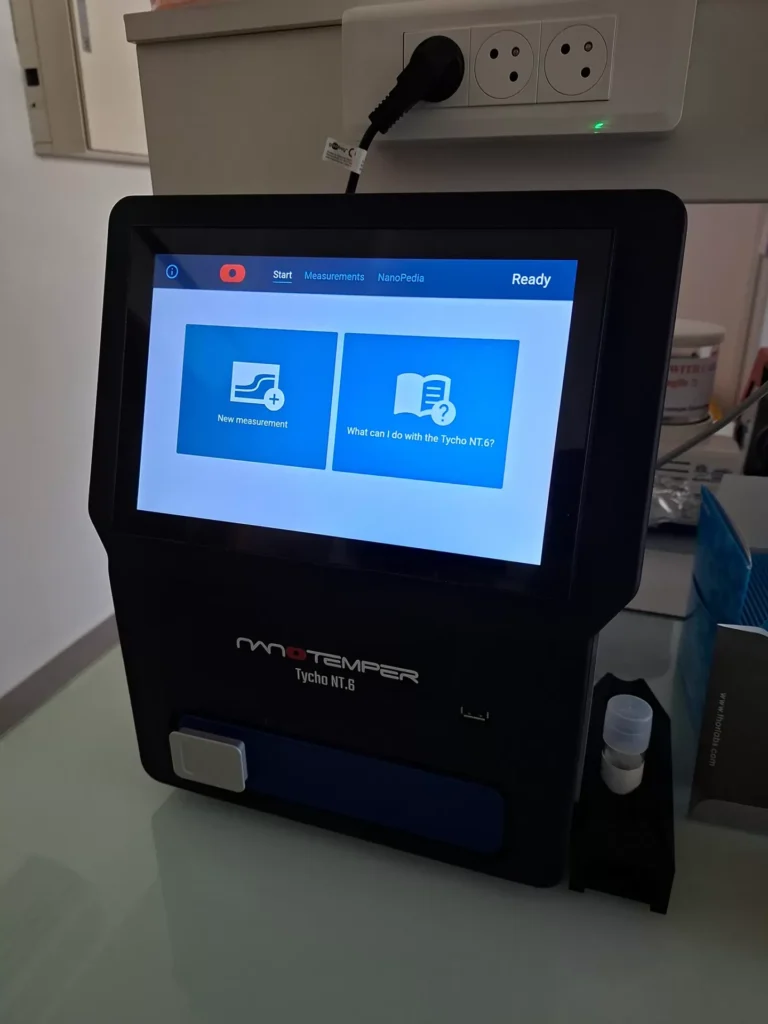
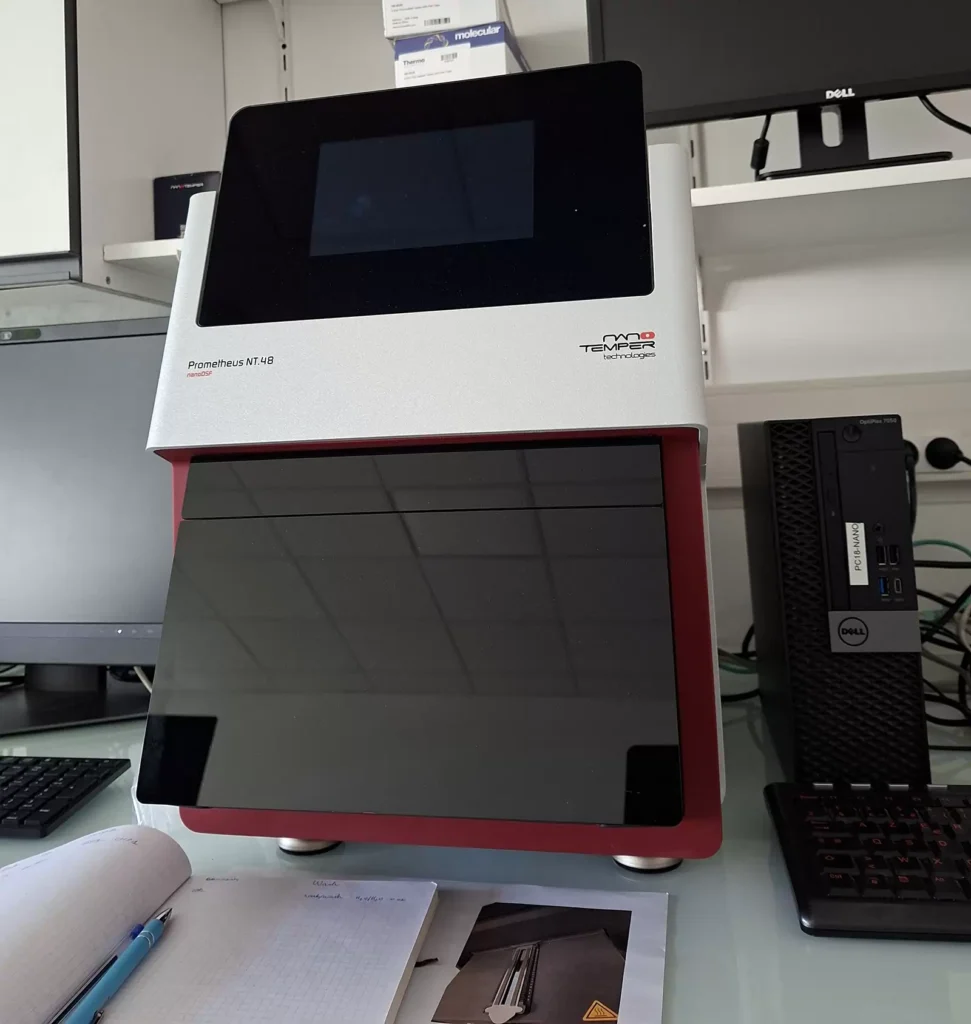
Equipments: Nanotemper™ Tycho NT.6 and Nanotemper™ Prometheus NT48
Description: Nanotemper™ Tycho NT.6: simultaneous measurements of 6 different proteins or conditions. Sample volume 10 ul. Duration 3 min.
Nanotemper™ Prometheus NT48: simultaneous measurements of 48 different proteins or conditions. Sample volume 10 ul. Duration 10 min.
Isothermal Titration Calorimetry (ITC)
Isothermal titration calorimetry ITC is a technique for measuring affinity and thermodynamics of molecular complexes.
Applications: Determination of affinity constants in protein/protein or protein/ligand or protein/DNA interactions. Determination of the stoichiometry of the biochemical interaction.
ITC determines binding affinity (Kd), stoichiometry (n), qnd thermodynamic constants enthalpy (ΔH), and entropy (ΔS) in a single experiment.
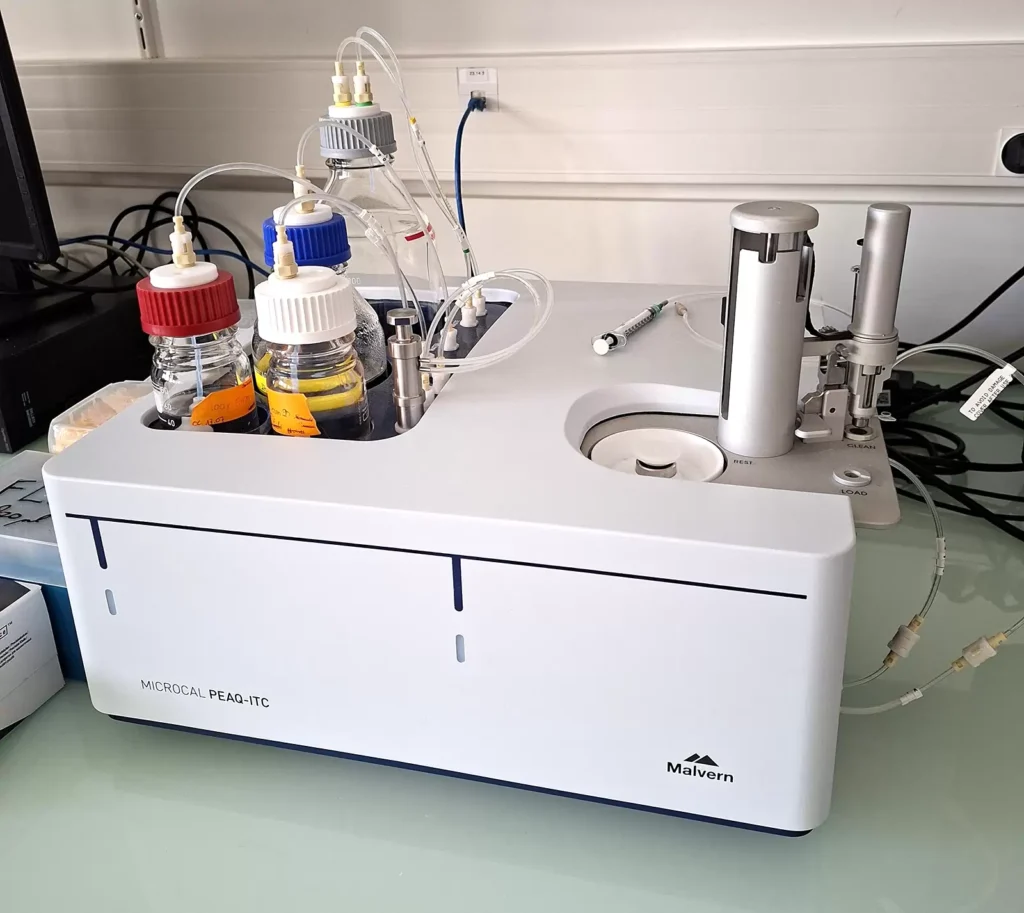
Equipment: Isothermal titration calorimeter PeaQ ITC (Malvern InstrumentsTM)
Description: Sample volume 300 µL at around 10–20 µM of molecule 1 in the cell, and 60 µL at 100–200 µM of molecule 2 in the syringe. Duration 1 hour.
Size-Exclusion Chromatography coupled with Multi-Angle Light Scattering (SEC-MALS)
SEC-MALS measures absolute molecular mass and oligomeric states of molecules in solution, and can reveal sample heterogeneity.
Application: Determination of molecular weight of proteins, protein/protein complexes, proteins/nucleic acids, nanodisks…Determination of protein oligomerization state and stoichiometry of complexes.
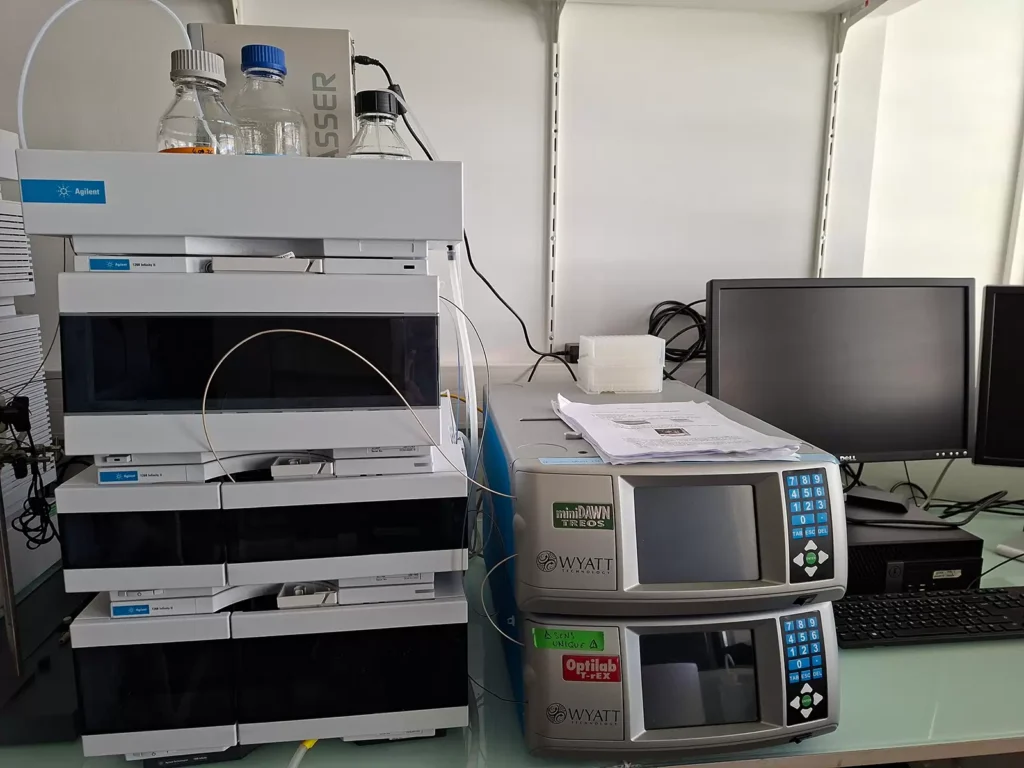
Equipment: MALS Wyatt
Description: Sample volume 20 ul at 2 mg/ml, duration 1 hour. Different size exclusion columns available.
THERMAL SHIFT ASSAY (TSA)
TSA is a technique for the measurement of protein melting temperatures (Tm). TSA measures protein thermal stability by monitoring changes in fluorescence as the protein unfolds with increasing temperature. It is used to assess protein stability in various buffer conditions, and to screen small molecule libraries for protein binding.
Applications: TSA is used to optimize buffer conditions, assess protein stability and sample quality, and screen potential ligands and fragments during drug discovery.
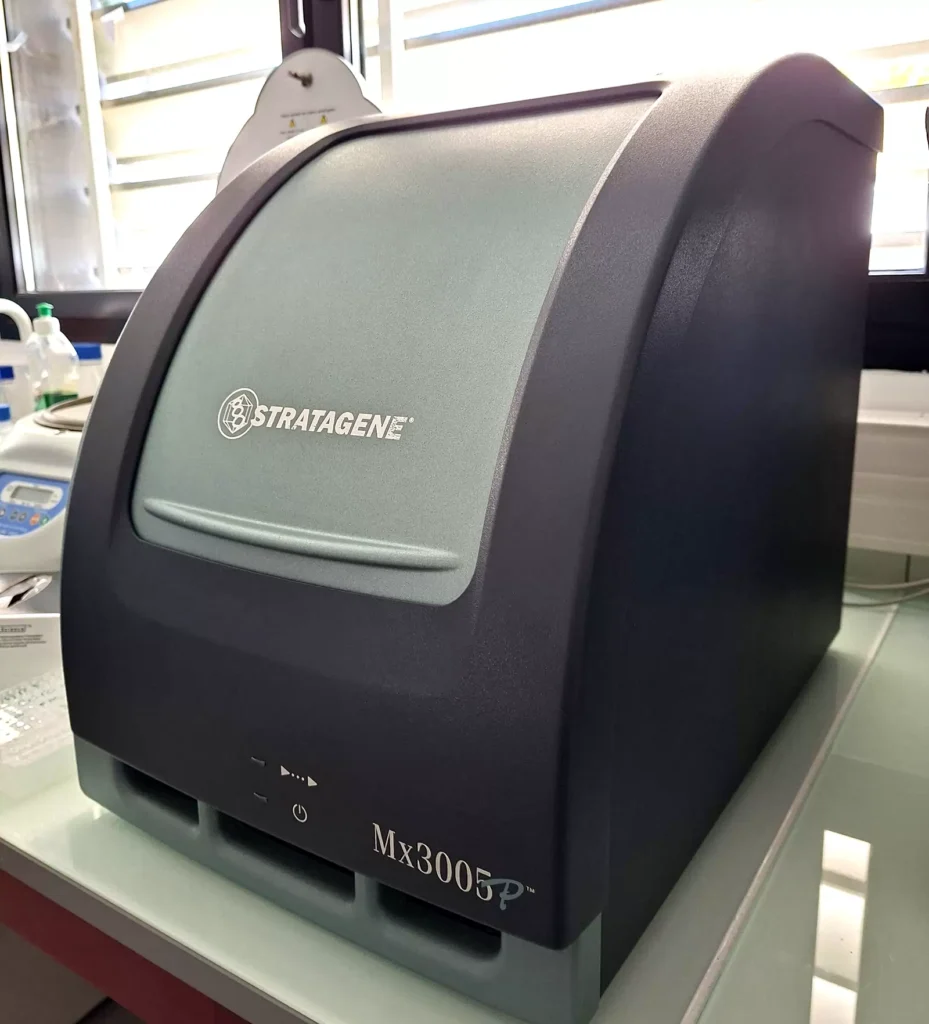
Equipment: QPCR Agilent TechnologyTM Stratagene MX3005P
Description: 96-well qPCR device using Sypro Orange fluorescent dye. Reaction volume 25 µL/well with a final protein concentration of 2–20 µM/well. Duration: 80 min
DYNAMIC LIGHT SCATTERING (DLS)
Dynamic Light Scattering (DLS) measures the hydrodynamic diameter of particles in suspension by analysing fluctuations in scattered light caused by Brownian motion, providing information on particle size and size distribution.
Application: DLS is used to determine protein size, aggregation, stability, and size distribution; used for quality control of protein samples
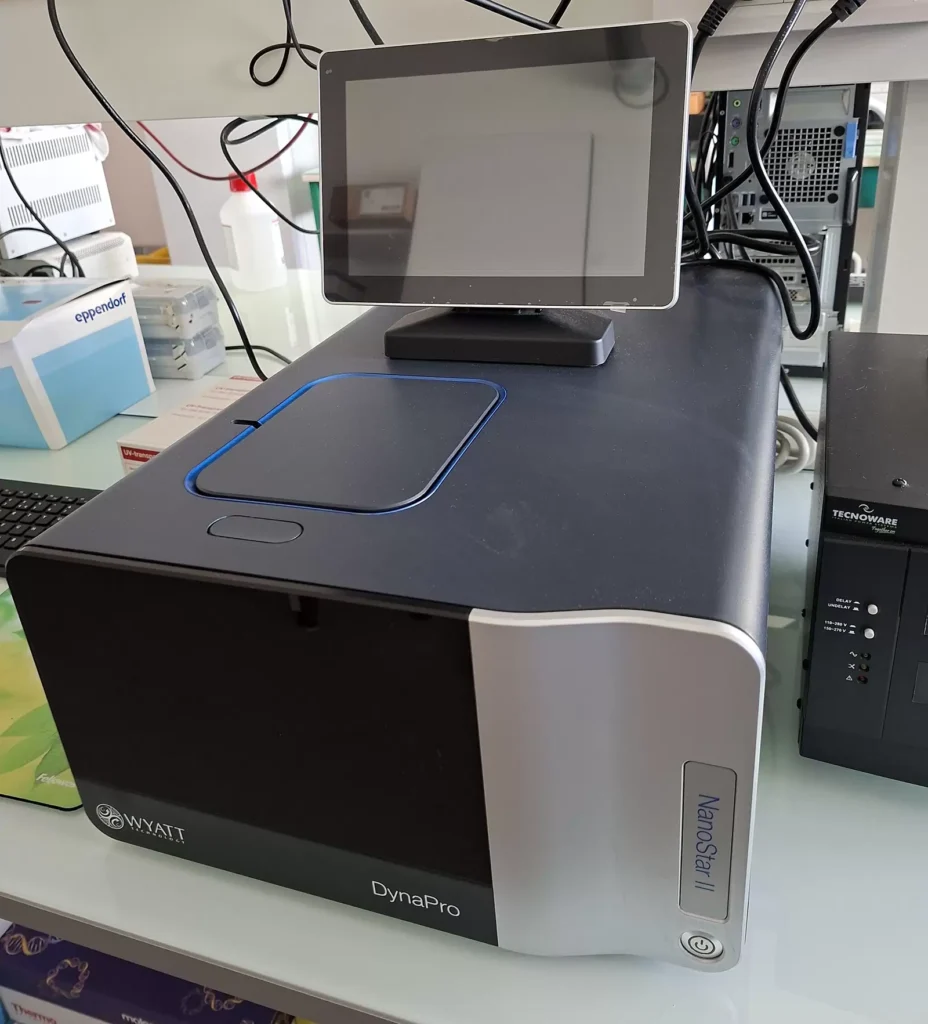
Equipment: DLS DynaPro NanoStar (WatersTM)
Description: Measurements in microcuvettes. Reaction volumes were 40 µL in quartz cuvettes or 180 µL in plastic cuvettes, with a final protein concentration of around 100 µM. Duration 15 min.